Monday, November 19, 2018

50. Becoming Dallas Willard by Gary W. Moon

Word cannot express how much I loved this biography. Gary Moon offers it with such love and affection for this wonderful man. This is a Renovare Book Club pick.  

Update: I led a discussion with six people. It was such a great discussion, and I had narrowed down the questions that the author gave in supplementary material for the book club. So I am going to put them here in case you ever read the book and want to think about your own spiritual formation. 


I.      NATURE/NURTURE/CULTURE: “Before I can tell my life what I want to do with it, I must listen to my life telling me who I am.” (Parker Palmer)  What is your life telling you about your deepest desires?

  1. NATURE: How has your nature (e.g. temperament, learning style, etc.) become part of your becoming?
  2. NURTURE: How has the image of one of your parents (or grandparents) contributed to forming your image of God?
  3. CULTURE: What do you carry with you from the early years of your church-life experience that continues to help shape your spiritual formation? What aspects have you needed to rethink, or find for yourself?


II.     WORK/FAMILY/MINISTRY: Three Stages for Living a with-God Life. How is the drama of your with-God Life playing out on the stages of work, family, and ministry?

  1. WORK: What aspects of your work-life are/were you most grateful and which pose/posed the biggest challenge to your Christian life?
  2. FAMILY: How do you see God’s hand in your family relationships?
  3. MINISTRY: Is there something you have come to understand or to do that helps you see the image of God in every person you meet? If yes, please explain. (I have an exercise attached that I did last December for the Renovaré Institute, and I thought it would be perfect for you as you head into this December! It was written by Jan Johnson who was mentored by Dallas Willard. Enjoy!)


III.    FINISHING WELL: Ideas for Time and Eternity/Intentionality in Living the “With God” Life/Spiritual Formation and Spiritual Disciplines/Loving God Flowing to Loving Neighbor

  1. At your stage of life, how are you intentionally living in light of eternity? (I attached praxis exercises for Psalm 23 and the Lord’s Prayer. Practices by Dallas mentioned in the book)
  2. What are some barriers you have experienced for being able to life in love with God and neighbor as you go through the day? What are your ideas for bursting out of those barriers?


52. The Enneagram and Prayer by Metz and Burchill


Stephen Coffey, OSB Cam, an ordained monk of the Camaldolese community of California led the "Appreciating the Wisdom of the Enneagram" Conference at the Queen of Angels Monastery in November, and this was recommended to us. At first perusal, I didn't really like it, but it has great depth and gave me insight into helpful prayer practices for people. I really ended up loving it!

Sunday, November 18, 2018

ETERNAL LORD OF ALL THINGS

I feel Your gaze on me.
I sense that with You are all the great beings of heaven --
angels and powers and martyrs and saints.
Lord Jesus, I think You have put a desire in me.
If You will help me, please,
I would like to make my offering:
I want it to be my desire, and my choice,
provided that You want it, too,
to live my life as You lived Yours.
I know that You lived an insignificant person
in a little, despised town;
I know that You rarely tasted luxury and never, privilege,
and that You resolutely refused to accept power.
I know that You suffered rejection by leaders,
abandonment by friends, and failure.
I know. I can hardly bear the thought of it all.
But it seems a toweringly wonderful thing
that You might call me to follow You and stand with You.
I will labor with You to bring God's reign,
if You will give me the gift to do it. Amen. 

Wednesday, November 14, 2018

49. The Critical Journey: Stages in the Life of Faith


25191847From Publisher: The Critical Journey, at its core, is a description of the spiritual journey: our response to our faith in God with the resulting changes that follow. In this book, authors Hagberg and Guelich address the following issues: the struggle to find meaning and wholeness, the crisis of values and identity at mid-life, the quest for self-actualization, the healing of early religious experiences, and questions about the spiritual journey. Their goal is to help us understand where we are on our individual faith journeys and also appreciate where others are in theirs. The Critical Journey does not reveal exactly how or when we need to move along in our personal pilgrimages, nor does it offer formulas for spiritual growth. Rather, it describes six phases of the spiritual journey and illustrates how people act and think while in these stages. This is an excellent guide for those who are wrestling with their faith and wondering how others have resolved their “dark nights of the soul.” Here is an answer for those who have wondered why everyone doesn’t respond in the same manner to the message of the Gospel. 


I found the stages somewhat obvious, except the part about "The Wall." That part was really wonderful. I also felt like there was quite a bit of redundancy as the stages are described again at a later time. I think a good updated edit is in order for this book. 

Also, I bought the Kindle, but it is a copy of the original book and not in Kindle format. So that made highlighting more difficult, and I am still not sure how the notes will export! I should have just bought the regular hard cover book. 

Nurturing From a King

Type Two EnneaThought® for November 14th
When Twos learn to nurture themselves and look after their own needs, they achieve a balance in which loving and satisfying relationships are not only possible—they will happen as surely as the sun rises. Presence alone will allow your nurturing of others to transform into genuine self-nurturing. (The Wisdom of the Enneagram, 149)


This has been such a lovely season for me of achieving balance. I am loving my time in the Spiritual Exercises of Ignatius of Loyola. I prefer not to call it "self-nurturing" but "nurturing from God." God is speaking to me! I also love the balance of exercise (which is also my work) and sitting for ministry and writing (my other work).  It is a good season. 

This week, I am at the "Call of the King" in the Exercises, and the free conversation "My Liege" and I are having are so precious. I am growing. I am learning. I like that this never stops with the LORD! I am excited to hear what He has in store for me. I trust Him because He is a good and benevolent King! 

Friday, November 09, 2018

Friday Fifteen Minute Freewrite

So much to say and so little time to say it. I have been lax in my freewrites lately. I love them so. The queen of the freewrites just had a birthday. We still love each other, but she doesn't really have time for me anymore, and I am so happy for her success in life and happy for the role I played in her journey and she in mine. Because she "doesn't have time" for me doesn't mean that I am unloved or unwanted. Something I am learning the Enneagram Type Two personality type. I have to let go of the fear that I am unloved and unwanted. I also need to go after what I want, and I don't think I necessarily want the deep relationship that we once had. I really love her, but we are going in different directions. We will definitely meet up and have a lovefest when we meet again (which I am sure will happen), but she is not a day to day friend, and that is OK! 

So today has been a phenomenal day. Because George listened to God and God told him to ask for every Friday to work from home instead of up in Hillsboro. I have him home from Thursday night to Monday morning. How cool is that! I love him at home. What a gift!

I am also over the moon because I am on Day 100 of recording my eating and exercise. I have a whole new WONDERFUL Lose It! online community of friends. That one person who rejected me (twice) and would nag at me about not recording daily is not in my friends anymore. That person was so shaming and guilt producing and not encouraging.  I only have one mutual friend with her now, and I left the other group we were mutually a part of so that I don't have to interact with her anymore. I am so glad that I came back. Some of my old friends are still there and really, really encouraging. It also helped to get the AppleWatch which is all connected to the website so I don't have to log in all my activities on the website. It also does not start subtracting exercise calories for each activity I do until I reach a certain calorie level. So I am not faked into believing I can eat more because of my exercise. It is so good, and I have gotten rid of all the weight that I gained for being in Renovare.

I guess that is the last thing I want to freewrite about. I loved the people and the curriculum, but it was not for me. Every day I would do the Examen and DESOLATION was always overeating. I also left Renovare 100 Days ago, and I have not struggled ONE DAY with overeating since I left, and I think it was connected. It caused me a lot of underlying anxiety. The way the community and small groups are set up was not what made me thrive spiritually. The academic nature was not what I wanted or needed. All the sitting writing papers and interacting online was brining me out of the sacred balance I had cultivated in my life. So leaving was the BEST decision I made of 2018, and the second and third best were doing Spiritual Direction training through The School of Sustainable Faith AND doing the SEEL Portland retreat with George. It is all SO GOOD. I am at the end of my 15 minutes, but it is a great day with great decisions all the way. 

God is so good. 

(No proofreading here)


The overall keynote of Twos is indirection. Personal needs and desires are expressed indirectly, through service to others. Twos feel that they cannot go after what they want directly: it must be given to them by others as a sign that they are really loved and appreciated. Notice today when you are being indirect. (Understanding the Enneagram, 78)

Sunday, November 04, 2018

48. What's Your Decision? How to Make Choices with Confidnece and Clarity


This book had a little bit more meat to it than the other book on Ignatian discernment that I read earlier this year when it was part of my spiritual direction curriculum. This is the replacement, and I think it is a good choice. 


The authors do a great job of explaining the principles of decision making that Ignatius laid out in the Spiritual Exercises. I particularly liked that they used scenarios and walked you through the principles for each scenario. It was quite helpful. 

What is so funny is that I went to a "Wisdom of the Enneagram" Seminar, and the Catholic priest who taught it tied the Enneagram types and Ignatian principles of discernment together. I thought that was providential that I happened to reading this book at the same time! 

47. Funny in Farsi

46349This is an easy and fun read. I read it in 2014. My book club was looking for something that would make them laugh after reading so many "heavy" books on World War II last year. So I suggested this. I love Iranian people and the book gives you insight into their wonderful, family-oriented culture.  It was the delightful, funny antics of a family who moved to Southern California in the 1970s. I highly recommend this book. (I was crushed that the Book Babes did not really care for it when I recommended it later for my Book Club.) 


EnneaThought® for the Day

Type Two EnneaThought® for November 4th
Today, can you discover positive qualities in yourself that you have not developed yet? Healthy Twos have immense goodwill and generosity of spirit. They are attracted to spiritual values such as love of God and neighbor, loving others as themselves, and forgiving others. (The Power of the Enneagram audiotapes)

Saturday, October 27, 2018

Holy Will


Type Two EnneaThought® for October 27th

The Holy Idea for Type Two is Holy Will, which means you can relax your efforts because everything really is "in God's hands." See if you can connect with this truth today. (Understanding the Enneagram, 42) 


So I had to understand what the "Holy Idea" thing was. It is a another concept I hope to understand better when I go to the Enneagram Seminar next week. Here is what this website says: 


"The Holy Ideas of the Enneagram are in service to the alleviation of suffering and the recovery of our true nature through remembering our Essence qualities.  The Holy Ideas remind us of who we truly are beyond our attachments and identification with the construct of the egoic mind.  As we observe our attachments and defense of the ego we become aware of the ways that we suffer.  We can choose to end our suffering.  Suffering is truly optional.  Pain is endemic to the human condition and must be faced squarely and experienced.  Suffering results from clinging to the dualistic, fixated patterns of believing that things are right/wrong (Type 1), that we are loved/unloved (Type 2), successful/unsuccessful (Type 3), abandoned/connected (Type 4), depleted/abundant (Type 5), unsafe/safe (Type 6), limited/free (Type 7), controlled/in control (Type 8) and important/unimportant (Type 9)." 


Here is what it says regarding this Holy Idea for Type 2:


"The experience of surrender is at the heart of Holy Will.  We surrender the illusion that our personal efforts are required to make good things happen.  As we loosen the belief that we are indispensable to making good things happen for others, and that we must manipulate to create good things for ourselves through the force of our personality, we become more humble.  Humility places us in proper perspective [to God] (the Enneagram Institute says to the Universe). Personal will attaches to outcome and we suffer through this attachment.  Through recognizing Holy Will and living in humility there is an awareness that things will always be taken care of."

Learning this concept is perfectly timed after ten days of "praying toward the peace" with a situation I learned about on Wednesday, October17 . I have arrived at a place of true surrender. God told me, up front, that a person's problems were not my issue and to let it go, but I had to pray through my feelings and continue to listen. So I have let it go (and feel nothing but compassion and love for that person's problems). This is my surrender. My personal efforts are not required to make the situation any better for that person. Humility is the realization that He is God and I am not. Selah! 

Friday, October 26, 2018

46. The Practice of Spiritual Direction by William A. Barry and William J. Connolly


These two authors are sages in spiritual direction. I found their wisdom engaging, and it added to my knowledge in the field. I am eating all of this reading up! So glad I made the switch to this curriculum for personal growth.  I also liked that they are Ignatian in their spiritual direction. 

Here is the definition of Spiritual Direction from the book:


Spiritual direction is “help given by one Christian to another which enables that person to pay attention to God’s personal communication to him or her, to respond to this personally communicating God, to grow in intimacy with this God, and to live out the consequences of the relationship.”

Spiritual direction focuses on religious experience. It is concerned with a person’s actual experience of a relationship with God.

Spiritual direction is about a relationship. The religious experience is not isolated, nor does it consist of extraordinary events. It is what happens in an ongoing relationship between the person and God. Most often this is a relationship that is experienced in prayer.

Spiritual direction is a relationship that is going somewhere. God is leading the person to deeper faith and more generous service. The spiritual director asks not just “what is happening?” but “what is moving forward?”

The real spiritual director is God. God touches the human heart directly. The human spiritual director does not “direct” in the sense of giving advice and solving problems. Rather, the director helps a person respond to God’s invitation to a deeper relationship.


Monday, October 22, 2018

As we grow older . . . we must move towards forgiveness, towards letting go and accepting responsibility for our lives at the present moment. This means letting go of grudges and resentments that drag us back into the past and sap our enthusiasm for the present and future. Forgiveness and letting go free us from the endless repetition of past stories of injustice and hurt that we tell as if they were the events of yesterday.
. . . But perhaps the greatest and most difficult challenge of later life is to forgive ourselves. We are called upon to forgive our own failings and mistakes and sins, and to love ourselves as God loves us. Forgiving ourselves means letting go of our regrets, accepting our limitations, and coming to peace with the decisions and actions that we can no longer change. Forgiving ourselves is the final fruit of accepting God’s forgiveness, and the only path to peace.
“The Spiritual Exercises and a Spirituality for the Later Years” by Gerald M. Fagin, SJ

Wednesday, October 17, 2018

43. The Road Back to You: An Enneagram Journey to Self Discovery

28268515This is my second time through this book, and it helped so much to do so. I listened to it last time. This time I combined listening with my Kindle Book, and I made highlights. This quote about my Enneagram Type Two really confirmed my decision to leave the Renovaré Institute. I needed a smaller group so I could work on my soul. The needs in that Institute were too overwhelming for me. I have found my people with the Spiritual Direction Boise Cohort! 

"If Twos are going to learn how to attend to their own needs as much as they pay attention to the needs of other people, they have to work on their soul in solitude. If they try to do this work in community they’ll be tempted to help those around them grow spiritually rather than focus on their own development. In this situation Twos’ tendency to drop everything to help people in crisis is more a defense against facing their own needs and feelings than an act of service. In their time with God they might ask themselves, Who am I when no one needs me?"

“A humble self-knowledge is a surer way to God than a search after deep learning.” Thomas À Kempis

Tuesday, October 16, 2018

41. Anatomy of the Soul

This is a reread because it is part of my Module II for Spiritual Direction training. I thought it was more fascinating the second time around when I took notes. 

I love how he has spiritual disciplines to go along with what he is explaining is going on in your brain. I especially liked how he talked about how brains can be changed when we tell our story to an empathetic listener. I have long believed in the power of story. This just added to my conviction about this. 


Anatomy of the Soul (xiv) – “an important part of how people change—not just their experiences, but also their brains—is through the process of telling their stories to an empathic listener. When a person tells her story and is truly heard and understood, both she and the listener undergo actual changes in their brain circuitry. They feel a greater sense of emotional and relational connection, decreased anxiety, and greater awareness of and compassion for others’ suffering . . . Dr. Siegel labeled the change ‘increased integration.’” 

42. Unoffendable: How Just One Change Can Make All the Difference

22574570  This is about not being angry, surrendering all in humility, and loving God and others. It had some endearing stories and the author is pretty funny. 

Addendum:

I had not been offended for quite a while. Wouldn't you know the DAY after reading this book something happened that probably would have offended anymore, but I am SO GLAD I had just read this book because I was able (by God's grace) to not be offended and respond in compassion and love. Perfectly timed book! 

Monday, October 08, 2018

40. Holy Listening: The Art of Spiritual Direction

20447591I didn't particularly feel like this book added anything new to my understanding of spiritual direction. I think maybe this was included in my curriculum because she was such an early pioneer in the resurgence of this practice among the lay people. I liked Sacred Companions and Candlelight much better. Also, she has a decidedly liberal bent that I found distracting in the book. 


“The greatest gift the director can bring is a loving presence.” (p. 135)

Wednesday, October 03, 2018

Tuesday Twelve: In Praise of Good Decisions

This is my praise for making a good decision. I just did not feel right in the Institute I was a part of. I know the majority of the people in that Institute are having a phenomenal time, and I do not knock their experience of it. We are so uniquely created. In addition, our histories are all varied and different.

As I have gone through my overlapping Sacred Story (for Spiritual Direction Training Boise Cohort) and Graced History (for the Spiritual Exercises in Everyday Life Portland Cohort), I realize how incredibly blessed I have been with mentors and friends. Right after having made a total surrender and commitment to God at 19 years old, God brought me these wonderful wise women and men who taught me to dig deeper into my relationship with God. I think this is what the Institute was trying to do, giving people what they didn't have in the beginning of their journey. I was unusual in that I had it, and it was FREE whereas the Institute was NOT FREE. It was also not as personal as I would have liked it, and there were not personal mentors like I had the first time around. There were teachers who taught in an academic way. That was not what I wanted or needed. I have already been blessed in that way. Now it was time to go deeper. 

The Spiritual Exercises have been that "deeper still" and "excel still more" of 1 Thessalonians 4 (because love is the ultimate overflow of the Exercises). The Spiritual Direction training gives me a smaller cohort of like-hearted people and very personal and accessible mentors without a smidgen of academics. No writing papers that fit academic parameters or answer the questions they pose. We write one page summaries of the one book a month we read answering personally and not academically. 

It was a good move. I was doing it for personal growth, and a review is always good, but the habits they were attempting to instill have been firmly rooted in my habits and life, and it has been all for free. 

The first weekend in Boise was phenomenal, and people asked me questions about myself which did not happen very often in the Institute. I did a lot of listening, but I do that a lot in my life so I was looking for something more mutual. I have that from the Boise Cohort, and I also have my Best Boise Buddy, Debbie, to debrief after each day of training. Such a plus!

So I better go. It was great. I am so glad I made the radical decision to take the SEEL/Spiritual Direction offramp to a new FREEway on the road to the glory of God! 

Monday, October 01, 2018

39. All the Light We Cannot See


19398490I made the mistake of reading this AFTER one of the best books of all time: Les Miserables. So, this book doesn't compare to that classical novel, but it is a good book. It is also a sad book. I thought I would be wowed by it because of all the rave reviews. I wasn't wowed, but I did like it. It made me want to keep reading to the end to see how all the characters ended up. I loved hearing about St. Malo and Paris since I was in Normandy and Paris last summer. That was fun. War is a sad subject though. :( 

Wednesday, September 26, 2018

38. Letting God Come Close: An Approach to the Ignatian Exercises


I did the Spiritual Exercises last year, and LOVED the entire experience (so much so that I am doing it all over again with my husband). This was fun to read from the viewpoint of giving the Spiritual Exercises as a Spiritual Director (which is what I am now being trained to do - stay tuned). I really like William Barry's writing style, and I learned nuances about the exercises. I wouldn't necessarily recommend reading this book unless you have gone through them or at least more familiar with them. 


It was a worthwhile read! 

Thursday, September 20, 2018

Type Two Enneagram Thought for the the Day


EnneaThought® for the Day


Try this Affirmation today: "I now affirm that my happiness does not depend on pleasing others." (Enneagram Transformations, 47)
Does this personality type system have me pegged or what? It will be good as I face new students this morning!

Monday, September 17, 2018

37. Falling Upward: A Spirituality for the Two Halves of Life


People rave about this book, but I just thought it was OK. He is a philosophy guy, and that is not really my thing. His premise is that we have two halves of life and most people don't really get to the second half of life. We all have to go on a journey to find our true home and true self, and he compares this throughout the book to Homer's epic poem, The Odyssey. That was fun since I have spent a lot of time in that poem.  


I think I started "falling upward" pretty early in life. So grateful for a breakdown at 23. I think that is really the best thing that has every happened to me. It was a marker point in history. The humiliation was so public, spread throughout my organization and my office. But it was so freeing at the same time. Pain has a way of doing that. Failure is a path to freedom. So grateful. I found so much about God through that "fall"! So maybe this quote encapsulates it for you. Sorry that I do not have the page number. I read a library book so I did not underline but found this in a review:


Failure and suffering are the great equalizers and levelers among humans. …There is a strange and even wonderful communion in real human pain, actually much more than in joy, which is often manufactured and passing. In one sense, pain’s effects are not passing, and pain is less commonly manufactured. Thus it is a more honest doorway into lasting communion than even happiness…. Many of us discover in times of such falling the Great Divine Gaze, the ultimate I-Thou relationship, which is always compassionate and embracing, or it would not be divine. Like any true mirror, the gaze of God receives us exactly as we are, without judgment or distortion, subtraction or addition. Such perfect receiving is what transforms us. Being totally received as we truly are is what we wait and long for all our lives. All we can do is receive and return the loving gaze of God every day, and afterwards we will be internally free and deeply happy at the same time.

Sunday, September 16, 2018

36. The Jesuit Guide to Almost Everything


I did the online Creighton University Spiritual Exercises last year this time (the new one starts TODAY, in fact), but I loved reading this "encyclopedia" of all things Jesuit to give me an overall view of Ignatian Spirituality. It was fascinating. I don't agree with everything in it, but it has some wonderful things about finding God in all things, making decisions, discovering vocation, and surrendering all to God. I am a big proponent of the Spiritual Exercises for everyone (including evangelicals - very little is decidedly "Catholic" if you are afraid of that). My husband and I along with another couple will be doing the Exercises in Portland starting in six days (seelportland.org). It is such a great deal: prayer exercises every morning, meeting with a spiritual director two times a month, and a half day retreat in a gorgeous setting with other retreatants once a month for only $445!


Here is an National Public Radio with the author: https://www.npr.org/templates/story/story.php?storyId=124357786?storyId=124357786

Saturday, September 15, 2018

35. Life Without Lack: Living in the Fullness of Psalm 23

This is very much in the theme of most of Dallas Willard's books so I am very familiar with the content, but it was nice to be reminded that with God we lack nothing. He has some very practical suggestions for sharing a moment by moment day with Jesus too.

I think I like Living in Christ's Presence much better, and it has similar content. 

Here is another review by someone from LibraryThing.com:


Using the well-known Psalm 23 as his launching point, author Dallas Willard explores what it means to live a life without fear; a life of trust in God; a life without lack. Based on a series of talks given by the author some 20+ years ago, this book was compiled posthumously by a close friend of the author. Willard is an expert at breaking down deep thoughts into digestible bites, and his warmth and true care for the reader is evident in every page. Read this one with pen in hand - lots to ponder and savor.

This review is based on an advance reader copy from the publisher. ( )
   NeedMoreShelves | Feb 6, 2018

Monday, September 10, 2018

34. The Brothers Karamazov and The Idiot by Fyodor Dostoyevsky


260874
I read the full book of the Brother Karamazov years ago and love it. This was a nice abridged version of the story. 

I did not know the story of The Idiot, and it was excellent. 

I really enjoy these LA Theatre Works adaptations of classics! 

33. Candlelight: Illuminating the Art of Spiritual Direction by Susan S. Phillips


This author has been doing spiritual direction for several years. She tells the story of her journey with nine of her directees. It is quite beautifully written, and I learned a lot about direction from reading about these journeys. 

Sunday, September 09, 2018

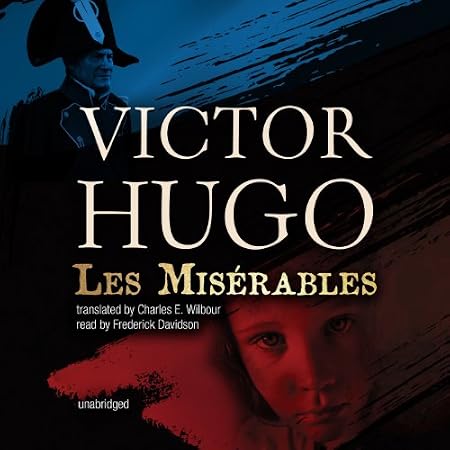
32. Les Miserables by Victor Hugo


The Best Book Ever Written!

This was such a good investment of 58 hours. I loved this narrator. This is my third or fourth time through it, and I loved it even more this time. It remains hands-down my favorite book by a long shot. How much more meaningful to have been to Paris and to see the location of the Barricades and all the places mentioned in the book. It was also such a treat to see the house in which he wrote part of Les Miserables! I was in HUGO HEAVEN at his house, and the old gentleman who looked after the tourist was so tickled at my excitement. 

I read this book in the summer of 1996, culminating with me seeing the stage version in Seattle on my birthday, July 27. This was before I had homeschooled and read all the books from The Well-Educated Mind (press hyperlink to see how long it took me). Twenty-two years later, I understood much more of his references.

The writing is so beautiful. The story is amazing. I think everyone should read this book at least one time in their life! It is so worth the time.   


"The night was starless and extremely dark. No doubt, in the gloom, some immense angel stood erect with wings outspread, awaiting that soul."


Friday, September 07, 2018

Type Two: Indirection


Type Two EnneaThought® for September 7th

The overall keynote of Twos is indirection. Personal needs and desires are expressed indirectly, through service to others. Twos feel that they cannot go after what they want directly: it must be given to them by others as a sign that they are really loved and appreciated. Notice today when you are being indirect. (Understanding the Enneagram, 78)

Tuesday, September 04, 2018

Type Two Thought for the Day


EnneaThought® for the Day

Type Two EnneaThought® for September 4th
When we are identified with our personality, we forget that there is much more to us. Today, let go of your habitual self-image and allow your healthy qualities of unselfishness and altruism to unfold. (Understanding the Enneagram, 360)

Monday, September 03, 2018

George finally took the Enneagram Test. He is a Type 9

I cannot believe how accurately this describes our relationship. George is a very healthy 9 though!

Enneagram Twos and Nines are similar in a wide variety of areas and reactions; both types are interested in nurturing others and in helping people to be better, more comfortable with themselves, and more at peace. Both types also tend to be optimistic and to reframe disappointments in the most positive way possible. This pairing has an outstanding warm, kindly, and good-natured quality about it that each side reinforces. Twos and Nines are easy-going, hospitable, and undemanding, happy to make friends happy and to welcome them into their home. Twos bring to the pair a more outward and interpersonally engaging energy: they would most likely be the first to introduce themselves at a party or to go to someone's aid and comfort if they perceived that the other person had some kind of problem. Twos are proud of their relationship, their home, their family and their friends—and they want to share them with others. Twos constantly add energy and new people to the relationship mix. They are more talkative than Nines and more openly curious about other people, how they live and what they are like, and more eager to get involved in others' lives.
On the other hand, Nines bring a quiet steadiness and uncomplicated directness that allows people to flourish and things to get done with a minimum of stress and conflict. Even if Twos become upset about their relationships, or are feeling moments of self-doubt about how loved they are, Nines have a way of calming them down and of providing a great deal of unquestioned acceptance. Both types are drawn to each other to provide soothing and support; their home and hearth, pets and love of nature are extremely important to them. Both go out of their way to be considerate of each other, as well as of other people. Much of their best communication is non-verbal, physical, arising from their simple, direct presence to each other. They can develop almost a psychic link with each other. This is a very mellow couple, whose emphasis on hospitality reminds people of how healing it is to be around loving, generous people.

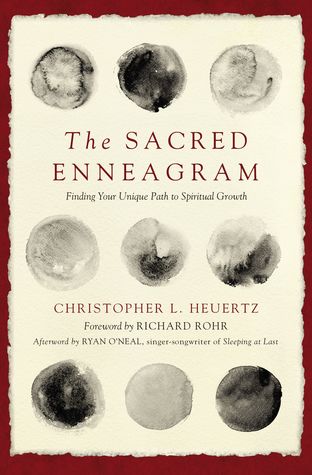
31. The Sacred Enneagram: Finding You Unique Path to Spiritual Growth by Heuertz

The Sacred Enneagram: Finding Your Unique Path to Spiritual Growth
I loved how this author ties the Enneagram types to contemplative spirituality. There were times where it seemed a little too complicated for me to understand, but I kept swimming through the material, and I did not drown. I think it was the third book I have read on this subject in preparation for a seminar I will be attending in November (https://www.benedictine-srs.org/events Scroll down the page to find the event). 

I understood so much more after reading this book. I think I took the test on the urging of Michelle Delanty about five years ago (?), but I didn't really know what to do with it and now I look at the page of the Enneagram Institute, and after reading this book, I "get" so much more! I like that this guy is really into not just using the Enneagram for self-awareness but for "reconstruction, where we'll find signposts to help us navigate the reordering of our identity into wholeness" (p. 192). 

My spiritual direction training will also cover this so we can utilize it when working with directees. 

Again, this author (like the authors of The Road Back to You) reiterated that Type Two needs solitude for growth. This book helped me understand more deeply why this is the case. So I am grateful. 

I was surprised to see that it is only $1.99 on the Kindle. I am not sure if that price is temporary or not, but I am so glad because the copy I had was a library book, and I think I would like to have this one for future reference. I took quite a few notes, but it will be nice to highlight the Kindle book. 

The one thing that was weird was he mentioned that yoga "connects you to your body" (p. 174). He is talking about how mindfulness has come into the general population of Western society and not specifically about Christian contemplative prayer, but he really needs to clarify this in the book. (For more information about this subject see the excellent explanation of what yoga is all about by Pietra Fitness: https://pietrafitness.com/pf-not-yoga/)

Other than this comment that needs to be clarified, and the misspelling of the famous missiologist Ralph D. Winter (not Winters as the author incorrectly spells his name), I found this book to be very enlightening and mind-stretching (still need to read over some parts because much of the terminology was new to me)! I also think he nailed why solitude, silence, and stillness are important for the different types. 

I have a friend who thinks Mirror for the Soul: A Christian Guide to the Enneagram is a better choice, but the reviews for it are mixed. 

I decided to add my book report for this book that I did for my Spiritual Direction Training:


The premise of the book is that the Enneagram is more than just a personality test for self-awareness, but it is a pathway of reconstruction for spiritual growth.  The author does a thorough job of explaining the Enneagram and then goes on to look at each of the types in terms of contemplative practice.

In Section One, the author identifies the questions of identity of who we are, how we got lost, and how we might find our way home to our true identity. I totally agree with his premise that we lose our way through our childhood wounds (determine that it comes at 3-5 years of age) that are an assault to our original innocence. This leads to masks that we wear. This can be our perception of things that leads to wounds and not necessarily things that our parent “did” to us. The good news is that God wants to bring us back to who He created us to be, our true essence. Then, he thoroughly explains the Enneagram including its history, his story of how he discovered it, and how it has personally helped him. I found his explanations to be extremely thorough. I was exposed to the enneagram probably more than five years ago; but even though I had read The Enneagram Made Easy and the Riso-Hudson website, I never quite understood how it really had practical application until I read The Road Back to You and this book. This book helped me understand it even more deeply. He is quite thorough, almost to a point where my head hurt reading it as he got into the minutia of this ancient tool. I just kept reading and things began to make more sense. At the end of this long and thorough foundation, Finally, he goes through all the types.

In Section Two, he introduced the intelligence centers of head (thinking), heart (feeling), and body (instinctive). These can determine how we react to things. Head people respond with anxiety or distress, body people respond with anger or frustration, feeling people respond with fear or shame.  He goes into the basic desire, fear, virtue, fixation, passion, direction of integration, and direction of disintegration for each type that was very through and informative. 

I finally understood why sometimes I would go to a Type 8 when I am under stress, anger coming out of “nowhere” when I am not normally an angry person. I used to call them my “Mr. Hyde” moments.  I knew this would happen when I was in a hurry, had too much on my plate, rushed, stressed, or driving. I knew I coped with it by balancing my life, slowing down, saying “no” to people asking me for help, and eliminating people-pleasing. Now I understand the why behind going to this disintegration because it was my “innate self-survival reflex” and “subconscious self-preservation instinct to prevent [me] an unhealthy person from falling farther down the hole [I] they feel stuck in” (p. 122).  This was an “aha” moment for me. I am still trying to understand the integration side of things when I go to a Type Four. I am looking forward to a workshop on “Appreciating the Wisdom of the Enneagram” that I will go to in November to understand this more thoroughly.

Section Three is what makes this particular book on the Enneagram so great. It is about contemplative practice based on our Enneagram type. The author states, “One of the gifts of contemplation is that it facilitates a very gentle awakening to the misguided, selfish, and ego-driven impulses in our subconscious and unconscious” (p. 180). He purports that each need something in their contemplative life to being them back to “home” or their “true self.” The “gut-obsessed, body, control types (8,9,1) need stillness. The “heart-obsessed, feeling, connection types (2, 3, 4) need solitude. The head-obsessed, thinking, competence types (5, 6, 7) need silence.  “Stillness interrupts the addictions of gut people and prompts a reevaluation of their drive” (p. 181). “Solitude functions as a correction to the feeling types dependency on connection and comparison” (p. 182).  “Is it possible to head people to turn down the inner noise—everything that serves as a distraction—to be able to really listen?” (p. 183). This part of the book is what sets it apart from other books I have read on this subject.

This book informs my personal relationship with God in that it explains to me, after all these years, why disconnecting from people in solitude has been so important in my personal growth journey. I am so grateful that my bible study leader in college strongly encouraged us to get away and pray. I need to get away in solitude so that I am not distracted by other people and my compulsion to feel like I need to help them. “Heart people who find themselves constantly drawn toward others for affirmation and approval are often still very lonely because they are disconnected for their essence . . . “In solitude, a heart person emerges in painfully liberating ways. Solitude teaches us how to be present—present to God, to ourselves, to others with no strings attached” (p. 182). This so makes sense to me because I often find myself in days of prayer and solitude saying, “I had lost me in the midst of all the people and needs. I have gotten back in touch with me!” It will inform my practice of spiritual direction to be able to understand what contemplative practice might be healthy for individual directees based on their Enneagram type.

I would heartily recommend this book to others. It goes much deeper than most books I have read on the subject. Even Ian Morgan Cron, author of The Road Back to You, states that his book is just a “primer” and that this book is excellent for going deeper. I highly recommend Cron’s interview with Heuertz on his Typology podcast Episode 11.

Friday Fifteen-Minute Freewrite

I was going to use a prompt from Julie's Bravewriter website, but I decided to just write on whatever without a prompt. It has been a w...