![]() |
| Isn't this picture just GORGEOUS? Love the trees in my neighborhood. |
Oh, I also met with Sister Joan, and that was very life-giving for me. The week before that, I met with Cammie, and that was good. So good.
"What makes the desert beautiful is that somewhere it hides a well" (The Little Prince by de Saint-Exupéry). My journey to a WELL-adjusted heart, WELL-watered soul, WELL-educated mind, and WELL-tuned body. "Love the Lord your God with all your HEART, and with all your SOUL, and with all your MIND, and with all your STRENGTH" (Mark 12:30-31).
![]() |
| Isn't this picture just GORGEOUS? Love the trees in my neighborhood. |
"The right art ", cried the Master, `is purposeless, aimless! The more obstinately you try to learn how to shoot the arrow for the sake of hitting the goal, the less you will succeed in the one and the further the other will recede. What stands in your way is that you have a much too wilful will. You think that what you do not do yourself does not happen. " p. 31
Assuming that his talent can survive the increasing strain, there is one scarcely avoidable danger that lies ahead of the pupil on his road to mastery. Not the danger of wasting himself in idle self−gratification ˙ for the East has no aptitude for this cult of the ego but rather the danger of getting stuck in his achievement, which is confirmed by his success and magnified by his renown: in other words, of behaving as if the artistic existence were a form of life that bore witness to its own validity.
The teacher foresees this danger. Carefully and with the adroitness of a psychopomp he seeks to head the pupil off in time and to detach him from himself. This he does by pointing out, casually and as though it were scarcely worth a mention in view of all that the pupil has already learned, that all right doing is accomplished only in a state of true selflessness, in which the doer cannot be present any longer as " himself ". Only the spirit is present, a kind of awareness which shows no trace of ego− hood and for that reason ranges without limit through all the distances and depths, with " eyes that hear and with ears that see ". p.43-44
How does skill become " spiritual ", and how does sovereign control of technique turn into master swordplay? Only, so we are informed, by the pupil becoming purposeless and egoless. He must be taught to be detached not only from his opponent but from himself. He must pass through the stage he is still at and leave it behind him for good, even at the risk of irretrievable failure. Does not this sound as nonsensical as the demand that the archer should hit without taking aim, that he should completely lose sight of the goal and his intention to hit it? p. 73
When Eugen Herrigel, a German professor of philosophy, went to Tokyo in the 1940s, he studied ikebana (the Japanese art of flower arranging), apprenticed to a master of archery, and spent six years studying Zen Buddhism through those activities. Zen in the Art of Archery is his distillation of that experience, an attempt to make the purpose of Zen practice understandable to those outside of its native culture. Despite the wide dissemination of Zen ideas in the ensuing years, Herrigel’s book remains an illuminating, graceful, and inspiriting introduction, through Western eyes, to the meditative insight of Eastern philosophy.
It’s a cliché that an unhappy childhood gives a writer ideal material. In the case of Gerald Durrell, however, just the opposite occurred: A blissfully happy childhood not only supplied him with wonderful matter for several bestselling books, but also started him on his life’s path to a career as a famous naturalist, zoologist, and conservationist. Warmly humorous, replete with intriguing natural history, and delighting in the merry eccentricities of the Durrell household, My Family and Other Animals is a splendid trip in very good company.
Lucy Grealy was nine years old when it was discovered she had cancer. Years of grueling treatment followed, including nearly thirty operations and the partial removal of her jaw. Autobiography of a Face is Grealy’s powerful, riveting account of growing up during those two decades in a society whose true religion often seems to be the worship of physical perfection.
"As she went on her way, gossamer threads, spun from bush to bush, barricaded her pathway, and as she broke through one after another of these fairy barricades she thought, 'They're trying to bind and keep me.' But the threads which were to bind her to her native county were more enduring than gossamer. They were spun of love and kinship and cherished memories."
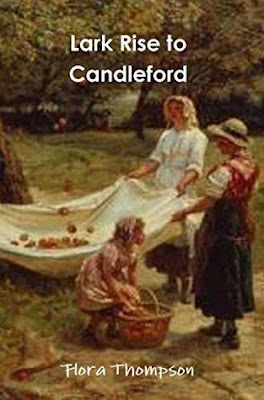
Detailing life in a country village in the years before the Industrial Revolution, Lark Rise to Candleford is a fictionalized autobiography. Its charming remembrance of local customs, crafts, and culture is distinguished by its fidelity to the roaming curiosity of a child’s eye, as an early passage illustrates: "One old woman once handed the little girl a leaf from a pot-plant on her window-sill. 'What’s it called?' was the inevitable question. 'Tis called mind your own business,' was the reply; 'an’ I think I’d better give a slip of it to your mother to plant in a pot for you.”' What’s most pleasing about Thompson’s writing is the easy confidence of her affectionate portrayal of times past. Farmers and traveling vendors, family and schoolwork, seasonal festivals and the small matters of community life are recalled, and the natural beauty of the English countryside is quietly honored by exact description. This is not only a book that evokes a lost world, but one that transports us to a simpler era with clarity and calm attention.
| I fell asleep watching this, but it is so good! |
I woke up very early because I fell asleep very early. I have a meeting at 10 pm tonight so I must take a nap in the midmorning because I think a nap after I come home from class at 3:30 pm will be too late. Or maybe not.
We were watching All Creatures Great and Small on Oregon Public Broadcasting where I realized that I could not keep my eyes open. I should have said that 10 pm would not work for me. I don't even know what this meeting is about, and I got this one-line question from the person who is calling the meeting, and when I asked for clarification, there was none. I don't know why she singled me out about it and asked me to talk about that without any detail. Then the group meeting was not scheduled during any of the times I was available. Is this how it is going to be, a 10 pm meeting? I want to have a good attitude going into the meeting. (Update: it was a great meeting, and I totally misunderstood the text and she was asking if I was coming because I realized I had forgotten to RSVP! All my deal, not hers. It will be a great partnership. Learning that it is OK to process my feelings and then go into meetings assuming the BEST of people: the "Ignatian Plus Sign"!
Today's Lectio365 was about being honest with God, and I don't think I have a problem with that. I had a sweet moment with God this morning in Luke 15 where I imagined my dad running toward me and embracing me. What I wouldn't give for that embrace with that big daddy of mine. I remember being honest with him and pouring out my heart to him and not having a problem with it. So, my goodness. Being honest with God is not one of my issues. I think my issue is more being honest with people in the sense that I am not necessarily lying to people, but sometimes I am afraid to tell them what I am thinking for fear of their reaction. Like saying, "A 10 pm meeting does not work for me in the long-term." It is funny because I was less that way in high school. I was much more direct and bold. Sometimes, it really is because I don't know what I want or what my opinion is until later. That is why I am a bit scared about this meeting today because I am not really sure what is expected of me in it, and I might have to think about it and get back to them.
Oh well, I had discussed with George about meeting with C on a regular basis just to give me more time with an older woman. I sure miss Ginny and Lorraine. They were the best of older women. I have wanted to talk to Fran for a while, but she got COVID! Four of my students have COVID. It means so much more work for me! I am thinking about maybe this might be my last year there. I love teaching, but I don't like teaching at the time of COVID. I don't like having to wear a mask (my glasses fog up or fall off and have broken twice as a result). I don't like not seeing my students because I have to take my glasses off because they fog up and fall off so much while I am exercising.
I do like students and coworkers though. I like getting on my bike and going to campus. It gets me out of the house. I like college students with their moldable minds and body. I love the conversations I have with them before and after class.
So I don't know. But it is 15 minutes so that was my rambling on a Tuesday morning. Speaking of students, I need to do my attendance from last Thursday! BYE!
I burn a candle most mornings, and I have never really thought about how a candle burns. The nerdy side of me sort of enjoyed this. I listened to it with Librivox, and the narrator was excellent!
From Amazon:
The greatest experimental scientist Michael Faraday delivered these six lectures at London's Royal Institution. Their subjects include the components, function, and weight of the atmosphere; capillary attraction; the carbon content in oxygen and living bodies; respiration and its analogy to the burning of a candle; and much more. Numerous illustrations.
Here is why James Mustich thinks it is one of the 1000 Books to Read Before You Die:
This captivating little book collects six demonstration lectures originally addressed to a group of young people at London’s Royal Institution in 1860 by the eminent British experimental scientist best known for his contributions to our understanding of electricity. Elucidating the chemical and physical properties and processes that conspire in a burning candle, Faraday delivers a splendid course in what was called, in his epoch, “natural philosophy.” One of the most treasured and widely disseminated works of popular science ever written, it has been fondly recalled as a formative inspiration by many scientists, including Oliver Sacks.
Since I started out this year with "Don't Let the Light Go Out" by Peter, Paul, and Mary, I love that the presenter, after explaining the "carbon footprint" of different animals and people through respiration, concluded his lectures with this:
In the lungs, as soon as the air enters, it unites with the carbon; even in the lowest temperature which the body can bear short of being frozen, the action begins at once, producing the carbonic acid of respiration: and so all things go on fitly and properly. Thus you see the analogy between respiration and combustion is rendered still more beautiful and striking. Indeed, all I can say to you at the end of these lectures (for we must come to an end at one time or other) is to express a wish that you may, in your generation, be fit to compare to a candle; that you may, like it, shine as lights to those about you; that, in all your actions, you may justify the beauty of the taper by making your deeds honourable and effectual in the discharge of your duty to your fellow-men.
Text for all the nerdy lectures found here:
https://ia803007.us.archive.org/22/items/diary182061/The%20Chemical%20History%20of%20a%20Candle.pdf
The Flowers of Evil (Les Fleurs du mal) was Baudelaire’s first volume of poems, and it announces its sumptuous depravity right from the start. On account of its descriptions of “unnatural” sex, its fiendish insistence on the connection between sexuality and death, and its vivid portraits of urban seediness, The Flowers of Evil led to Baudelaire’s prosecution for public indecency upon its original publication in 1857. Six poems were banned, and Baudelaire was fined three hundred francs. If the shudder came from the poet’s caress of corruption, drunkenness, and melancholy, the lasting thrill came from his unabashed conviction that the dignity of art and even beauty fell outside the borders of morality.
The plot of Nicholson Baker’s debut novel is simple: A man, returning to his office building from a lunch hour that included milk, a cookie, a small errand, and a stroll, goes up an escalator. That’s it. Only 135 pages long, and graced with numerous lengthy and absorbingly digressive footnotes, this is a wise, patient exploration of that unseen mental space in which we pass our time—and it’s very funny to boot.
James Mustich thinks you need to read this because...Set in Mexico in the 1930s, when the Catholic Church has been outlawed by the revolutionary government, The Power and the Glory portrays a corrupted and courageous cleric’s devotion to his calling, despite his alcoholism (Greene gives him no name other than “the whisky priest”), his licentiousness (his fatherhood is emblem of his forsaken chastity), and his tortured alertness to his unworthiness. Knowing he risks execution by carrying the sacraments from village to village and nourishing as best he can the spiritual needs of the poor, he struggles to uphold the vision of a God who both eludes and exhilarates him. Damned if he does and damned if he doesn’t, the whisky priest is a hero who, in his very unfitness for the role, reveals the imaginative nobility of faith, hope, and love even in—especially in—the most unexalted settings.
| Happy Kings' Day |
I realize now that there is no way I can do more than three hours of spiritual direction in one day. So I don't know how people like BZ can see five people a day, five days a week, three weeks out of the month. I think it is because he is not a real "connect" to people type and more a passion type. I don't think I could have sixty sessions in a month. I am more a 20-25 people a month sort of girl. I have to be diligent about cutting off the time at one hour. That is my growth point for a couple of my directees.
I am also trying to be more diligent about taking time to read every day. I was good other than yesterday. I am trying to finish up a 148 episode series that I started on Thanksgiving week. It has taken me forever, and I am really excited to be done because I am cutting news out of my life this year. I would get so desolated by what is happening in the world. I will stay informed by short reading on the internet or talking to George, but I am cutting it out for the year.
Oh, I forgot that leading a cohort has also gotten to be more work than I thought because I had to do Safeguarding Training that took 2 1/2 hours yesterday, but it was interesting (although desolating to see how clergy has taken advantage of the vulnerable).
There is my timer. Bye!
In the pages of this classic adventure tale you’ll meet one of the greatest heroes in American literature, Nathaniel Bumppo, a rugged scout and woodsman who goes by any number of nicknames, among them Natty, Leatherstocking, Pathfinder, Deerslayer, and Hawkeye. The Last of the Mohicans is the second in the series of five Leatherstocking Tales that James Fenimore Cooper wrote about Natty; it followed The Pioneers, a portrait of frontier life at the end of the nineteenth century in which Bumppo appears as an old man. The character in the first novel proved so popular that Cooper brought him back, this time in the prime of life. Cooper’s exciting, action-packed yarns helped shaped the romantic notion of the pre-Revolutionary American wilderness as a stage for nobility of character and resourceful courage. Although not always historically accurate, they do imbue the uncorrupted forest with an imaginative promise that reflects the overwhelming power the unsettled continent had in shaping the fears and fortunes of the early colonists. That promise found no better embodiment than Natty Bumppo, and Natty had no better adventure than The Last of the Mohicans
I will say she talks about the "Morning Pages" as though they are a chore. I laughed because I LOVE to write. So, I will keep doing this. I don't like how many paper pages I will have to go through in one year 500+ (1095 sides), but I see the advantage of writing with versus typing. I am looking forward to doing this more as the year goes by.
Favorite line:
"Enthusiasm (from the Greek, “filled with God”) is an ongoing energy
supply tapped into the flow of life itself."
Ephron is an incredibly good writer. These are a bunch of articles she wrote back in the early 70s when I was just coming of age in the midst of Watergate and Women's Liberation. It was a fascinating look at a woman who was an adult at that time. Ephron was a hard-core feminist, and she talked about abortion almost as if it is a badge of honor. I believe in equal rights for all, including unborn females. So that was off-putting for me. Yet, some of her articles were very interesting insights, and the book did hold my interest for the entire time.
I was going to use a prompt from Julie's Bravewriter website, but I decided to just write on whatever without a prompt. It has been a w...